


This is a summary of the last 3 articles I have written on how to prevent a heart attack.
It looks at actions you can take, and further tests your doctor might consider.
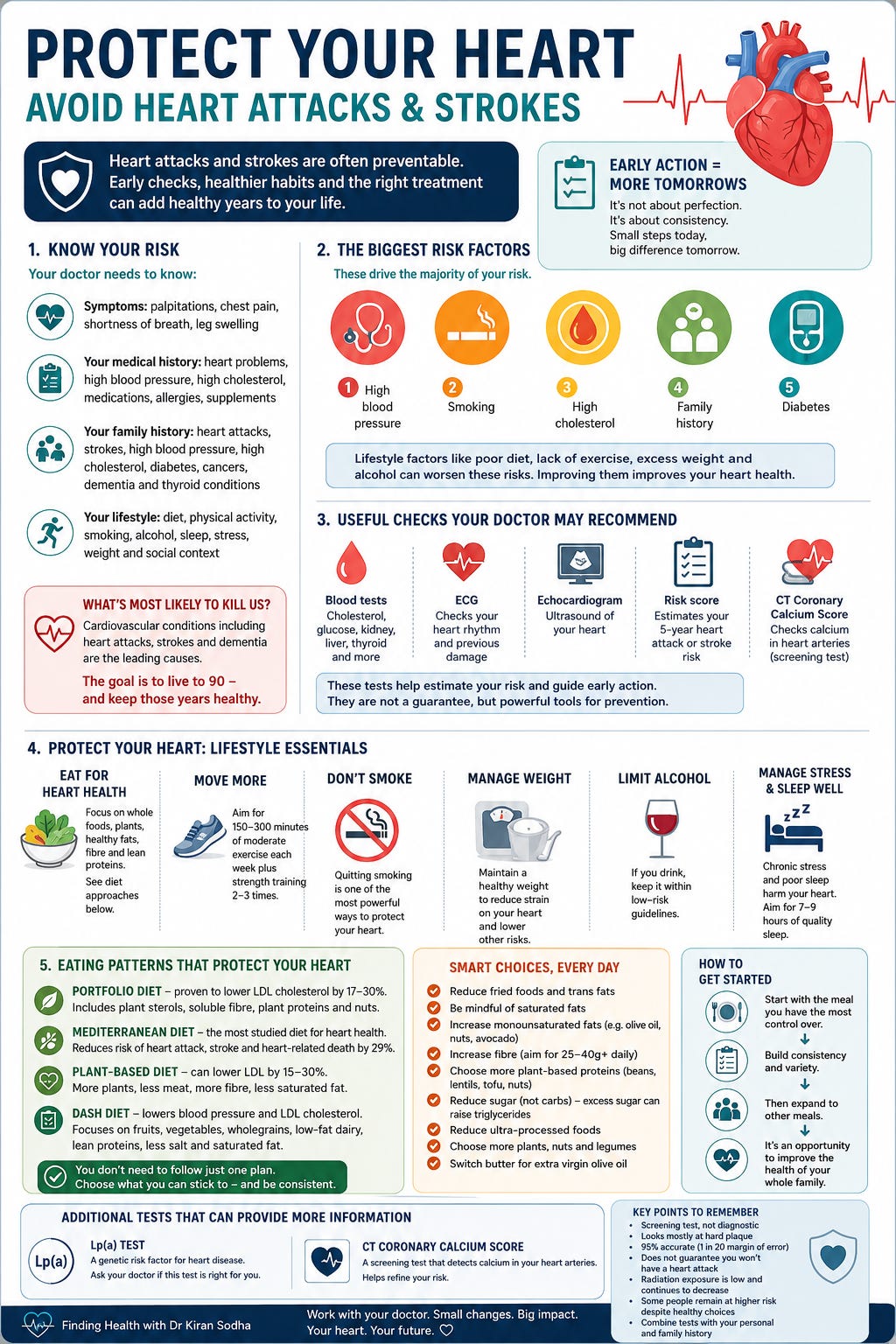
Key Points to Reduce Your Risk of Heart Attack and Stroke
Heart attacks and strokes are often preventable.
The goal is not perfection, the goal is consistent action over time.
1. Know Your Main Risk Factors
The biggest drivers of heart disease are:
High blood pressure
Smoking
High cholesterol
Family history
Diabetes
Lifestyle factors such as poor diet, inactivity, stress, poor sleep and excess alcohol increase these risks further.
2. Have an appointment with your family doctor.
Your doctor may check:
Blood pressure
Cholesterol
Blood sugar (diabetes screening)
Weight and waist circumference
Family history
Smoking and alcohol intake
Exercise, sleep and stress levels
Additional tests may include:
ECG (heart tracing)
Echocardiogram (heart ultrasound)
CT coronary calcium score
Special cholesterol markers such as Lp(a)
They do not guarantee prevention, but they help guide earlier action.
3. Improve Your Eating Pattern
You do not need a perfect diet.
You need a sustainable eating pattern.
Strong evidence supports:
The Portfolio Diet
Can lower LDL (“bad”) cholesterol by 17 to 30%.
Focuses on:
Fibre
Nuts
Plant proteins
Plant sterols
Mediterranean Diet
One of the best studied diets for heart health.
Associated with lower risk of:
Heart attack
Stroke
Heart-related death
Plant-Based Eating
Can lower LDL cholesterol by 15 to 30%.
You do not need to become fully vegan or vegetarian. Even reducing meat intake can help.
DASH Diet
Designed to lower blood pressure and also helps cholesterol.
Focuses on:
Fruit and vegetables
Wholegrains
Lean protein
Lower salt intake
4. Key Food Changes That Matter
Try to:
Reduce fried foods
Reduce trans fats
Reduce saturated fats
Reduce ultra-processed foods
Reduce excess sugar intake
Increase fibre
Increase vegetables and legumes
Increase nuts and seeds
Choose more plant-based proteins
Swap butter for extra virgin olive oil
Consistency matters more than intensity.
5. Move Your Body
Exercise helps:
Lower blood pressure
Improve cholesterol
Reduce diabetes risk
Improve weight control
Improve mental health and sleep
Aim for:
Regular walking
Strength training
Any activity you can sustain long term
Doing something is far better than doing nothing.
6. Stop Smoking
Smoking is one of the strongest risk factors for heart disease and stroke.
Stopping smoking has major benefits at any age.
7. Prioritise Sleep and Stress
Poor sleep and chronic stress:
Increase blood pressure
Increase unhealthy eating
Worsen metabolic health
Increase long-term cardiovascular risk
Aim for:
Regular sleep
Stress reduction
Recovery time
Better routines
8. Understand Family History
Some people have higher inherited risk despite healthy lifestyles.
Important family history includes:
Heart attacks
Stroke
High cholesterol
Diabetes
Dementia
If strong family history exists, discuss:
Lp(a) testing
Earlier screening
More aggressive prevention strategies
9. Start Small
Do not try to change everything at once.
Start with:
One meal
One daily habit
One consistent improvement
Then build gradually.
Small changes done consistently over years can meaningfully reduce risk.
10. Prevention Works Best Before Symptoms Start
Many people feel well before a heart attack or stroke.
The purpose of prevention is to identify risk early and act before serious disease develops.