


It’s eighteen months since I moved to Australia and I have found it difficult to make sense of the big life changes, and contrast it to my life in the UK. There’s much to say, but I also don’t quite know how to say it.
While I will continue to write about healthy ageing, preventing illness and conditions like type 2 diabetes, I also plan to write more about my experience as a doctor in Australia, and in contrast to the UK.
I wrote this article in March 2025, before I left, and before I really knew what my life in Australia would be. But now, eighteen months on, I feel compelled to share it again to provide some context of my future writing on my experiences practicing as a doctor in Australia.
5th March 2025.
This is difficult to write about, as I move to start work on the Gold Coast in Australia soon. My passion for work in lifestyle medicine, diabetes and metabolic health remains, as does my clinical expertise in prevention and remission of illness, alongside my support for health innovation for health outcomes.
I don’t want to be seen as jumping ship… nor do I want to be seen as chasing the shiny object or seeking greener grass, although I think I am. Nor do I not want to come across as ungrateful for the opportunities afforded to me.
Losing my identity as a GP in the UK
I worry I might have entered the ‘groupthink’ of pessimism of UK health profession. But the truth is I don’t have a doctors network that I identify within a specific geographical area. I may base my work in South Warwickshire and London, but I can count the doctors who are close colleagues on one hand. While my online presence has grown, my local presence has grown smaller.
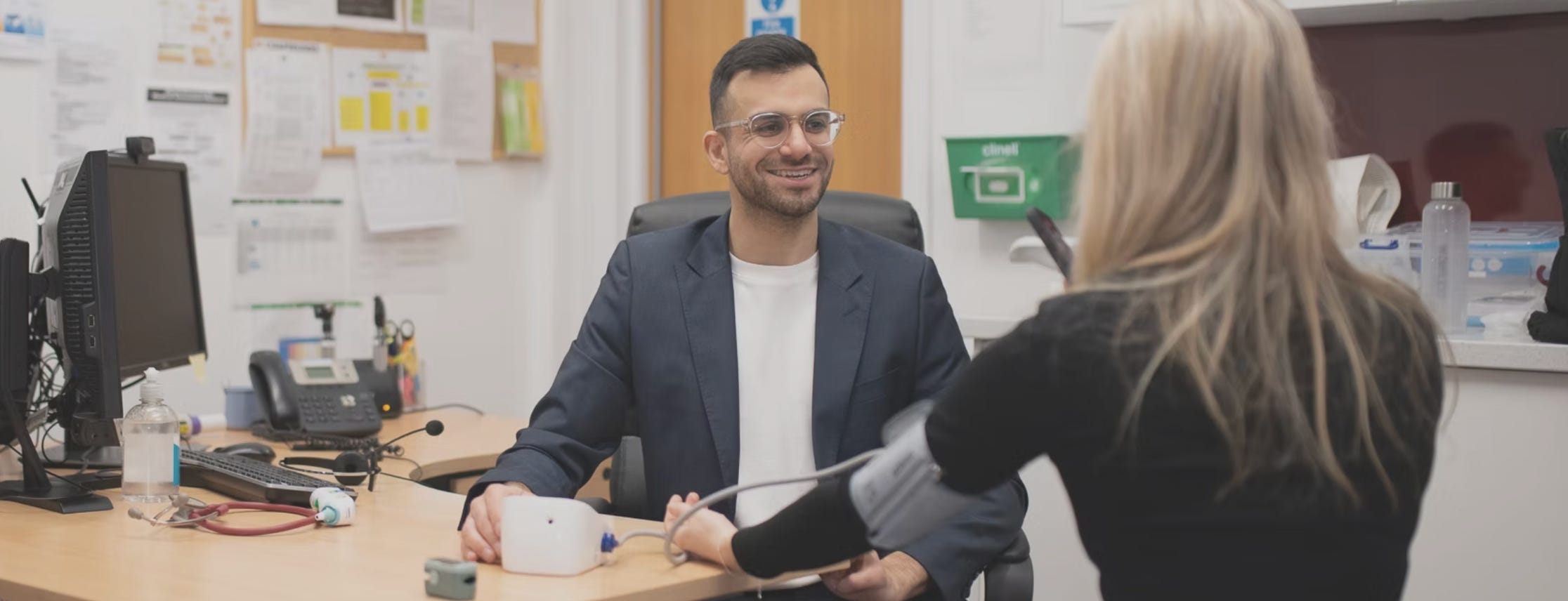
I can’t un-see what I’ve seen. I can’t un-know what I know.
In search for improving health outcomes, I have grown further disillusioned with the health system as my network of colleagues has expanded from general practice and moved into the world of nutrition, dietetics, personal trainers, coaches and even broadening my awareness of osteopathy, yogis and coaches.
It has taken me on a journey to understanding the physiology of how disease is created, rather than the disease itself. I now better understand diabetes, lipids, preventative cardiology and fatty liver disease prevention, and real treatment for curing rather than management better.
I often feel I’m speaking an alien language to the career I am trained in.
GPs could be Health Creators, but instead we’re Masters in Disease Management.
GPs in the UK are rewarded for managing and waiting for problems; we are are rewarded for the appointments we create, the availability to see more on the treadmill and ramp up output.
In pursuing operational efficiency, without an eye on the quality of health outcomes, we are in a spiral of downgrading the health service. It’s well known that siloed care in secondary, hospital-based care increases health costs, and reduces the holistic view of the patient. We have introduced siloed care despite knowing the negative impacts this has often had on our patients in hospital.
The siloed care has not focused on specialisation. In fact it has worked to bring in a lower cost workforce and in doing so this has downgraded the quality and expertise of care you have access to in the UK. This includes ANPs for acute infections, paramedics for home visits, pharmacists for prescriptions, and Physician Associates instead of GPs.
In my opinion this is the antithesis of holistic care, and it leaves GPs increasingly at litigious risk as they remain responsible for your care and supervise the other practitioners, despite decisions not being made by GPs. This without any uplift in income for GPs to reflect this changing role. In fact with all of this there is now lower real pay for GPs year on year.
GP income in real terms is 26% lower than 2015.

It’s not about money. But it also is. It’s a pay cut not just real terms, but in nominal value too.
Assuming the same salary, accounting for inflation I live with a 26% pay cut. I have been offered job opportunities in the last 12 months in the UK that enable me to support health creation for patients, but at a further 25% reduced rate salary.
Not only is innovation and health improvement not being rewarded, it’s being downgraded.
Frankly I don’t think we’re providing any better care than in 2015. In fact, I would even argue to say that it’s exactly the same, or worse. GPs have innovated in giving you more appointments digitally, by phone, booking services and getting test results on your app.
But is the care really any better, and are GPs really any more valuable to the country?
Pay is lower for improving services in the NHS. And it’s not health performance focused.
The truth is, you are often likely to be paid less for promotions that require a wide range of skills outside of medicine. And having those skills (e.g. an MBA etc) are not provided weighting or rewarded, so there is no clear incentive to continue to build a wide range of skills.
There is no performance management or reward for achieving targets, so we have services that don’t exist for years or will never exist despite being commissioned.
There are medical directors in charge of setting up these services, in their positions for years holding down their salaries which continue to be paid, if the service is never built. Inertia, keeping your head down, and being present on the next Teams meeting is the reward. Hours and hours of clinical time is being lost to Teams calls of 30+ doctors at a time.
Health innovation in the UK has got a bad rep.
And with good reason. Especially in primary care. It’s the walls at every corner. It’s the lack of reward for taking risk, and it’s the ‘all or nothing’ approach in the NHS. It’s aligning to the NHS agenda whether or not that improves the needs of your patients. It’s incremental innovation cannot exist from the ground up, because it’s not sustainable for innovators and not easily rewarded.
Radical innovation may be sexy. But it’s incremental innovation that prevents health services from falling behind.

Once you have an NHS contract, the world will look to your innovation, but it could take a lifetime to break down the barriers to achieving this. Some would argue with good reason, because there’s huge risk to continually deploying changes across a country-wide health system. But these barriers don’t allow continued incremental changes because of the rigidity, preventing change in such a lumbering beast.
Some of us don’t follow rules.
We break things. We love doing it too. I know I have a higher than average need for autonomy and my drive as a doctor comes from wanting to improve health outcomes, not just operational efficiency, although I see the value in both.
Perhaps,I’ve become disillusioned being a medical entrepreneur and innovator in the UK. The truth is, all I see is the status quo. I see mismanagement of resource with no accountability, the NHS is a lumbering beast, but so is the monopolistic and overly red-taped private sector.
Will the new GP contract save GPs?

I see a paternalistic, even an old-fashioned era of GPs & government contracts.
The new contract plans to remove most of the Quality Outcomes Framework (the only real metrics of health outcomes in general practice) to give GPs more autonomy and move more focus to the CQC.
I haven’t reviewed the financial impacts, but will it lead to a 26% improved pay? And will we witness a new status quo and gradual downgrading of your pay over the next 20 years? And will it have any impact on the value of healthcare we provide patients?
For innovators and entrepreneurs this move may promote over-regulation and misses the entire point of improving health outcomes.
In my view we’re heading in the wrong direction. We’re moving our focus to even more ‘operational outcomes’ rather than ‘health outcomes’. Improving the health of the nation is a case for disease management, equivalent to shifting the pieces around on the table and keeping busy. Not health creation, support or reward for such activities in general practice.
Without the right incentives on the ground to innovate and improve health outcomes, improve really being the word… the NHS is left behind, so bringing in what is already seen as the two-tier system… those who have the ability to pay for better access to a range of qualified health professionals, and those who are left with the fragmentation of general practice.
What is efficiency if it doesn’t plug demand?
We have a medical system enthralled and obsessed with medical management, and providing rewards on such metrics. But there is no financial reward for prevention or remission.
Albeit this is hard to measure. If you’re in an affluent suburb working as a GP, you will experience the benefits of prevention if this were measured, without lifting a finger. So I’m not proposing the exact opposite. I sit in the doctor’s chair and see the poorly controlled diabetics, knowing that they won’t follow my advice or feel motivated to change.
But why is that you, the patient in the UK, can’t change?
Is it that you won’t take control and improve their health conditions, or actually they “can’t, or they haven’t been empowered to?
Is it because there isn’t a medical model that supports or rewards those who aspire to this?
Is it that you can’t because there aren’t incentives in our society to improve their condition?
Is it because you can’t because of a level of personal self-education and courage is so unusual that it feels insurmountable?
Is it that your environment, including bylaws and town planning that has contributed to this, can’t be changed?
Is it that we haven’t empowered you?
It’s all of these together, and much more too, including the health and resulting health inequalities we see in society.

Now I really am throwing my toys out the pram...
Ultimately for me, as a GP in this country (UK), I feel I have been sold a lie. A lie that working would let me be able to see patients, but to contribute and innovate through incentives that reward improving patients’ health. GPs are in on it too, since the system rewards them to award job to those who will ruffle feathers the least, because who cares if it really changes health outcomes?
Was I sold a lie?
I do wonder if I have been sold that the lie of a “career” in general practice. I often feel my skills are being downgraded as a clinician, and the only thing left I have is my unrewarded passions for certain clinical areas, improved wisdom and better communication skills.
The system is rewarding reducing quality.
Here’s how I see it.
A GP surgery is provided contracts, and can deliver the service within the a pot of money being provided. The less availability and expertise in the service (e.g. less GPs and more PAs) and less availability of appointments, the less the cost of delivery.
Therefore what’s left over is profit. So GP owners are incentivised to downgrade a service to maximise their profit.
So the system rewards the highest disparity between the payment from the government and service it provides.
A pensive philosophical take.
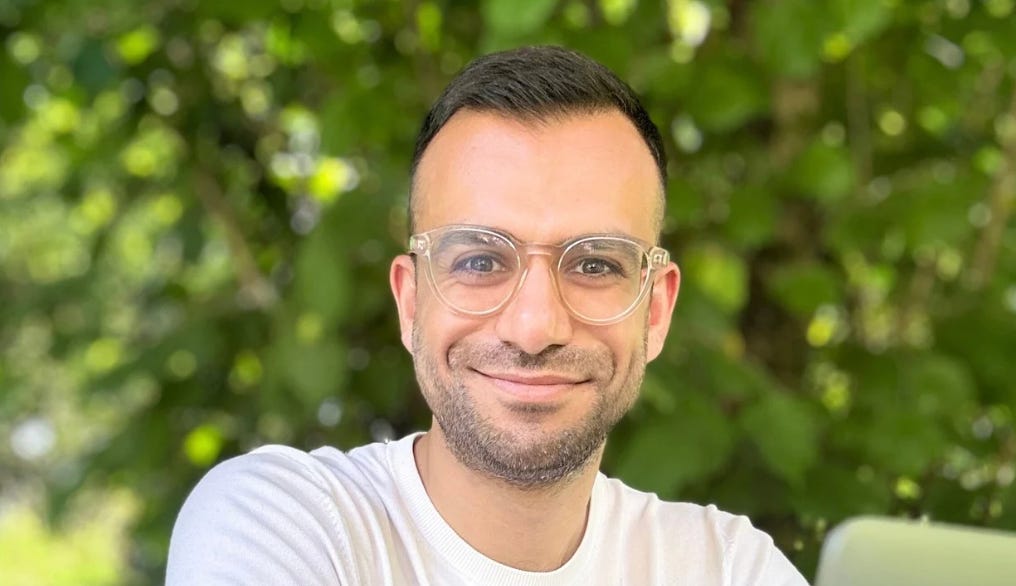
My journey career journey is merely at a fork. I’m not sure if it’s the end of my time in the NHS and UK. But it doesn’t feel I can continue, or I will return.
These are turbulent times in the UK, and if I was confident that I could be reincarnated into the same life and repeat this all again, then I could perhaps ride this out.calmer, and the grass is greener. To see if it allows me to grow and expand in different ways, but if this is the only life I have, then it is time to jump ship, swim hard, and see if the shores are
Perhaps it’s all within me, and I need acceptance.
Or perhaps I’ve seen too much in the private and NHS sectors, health innovation circles and the many blindspots of clinicians, managers and leaders to know where my opportunities lie.
There are personal reasons too.
This may be my mid life crisis. I am not excited, not scared, not worried. But I am ready.
There are opportunities.
The opportunities I witnessed visiting Australia in 2023 could not be ignored. For medical doctors I can confidently say, through my own eyes (but without direct experience) it might just be greener down under.
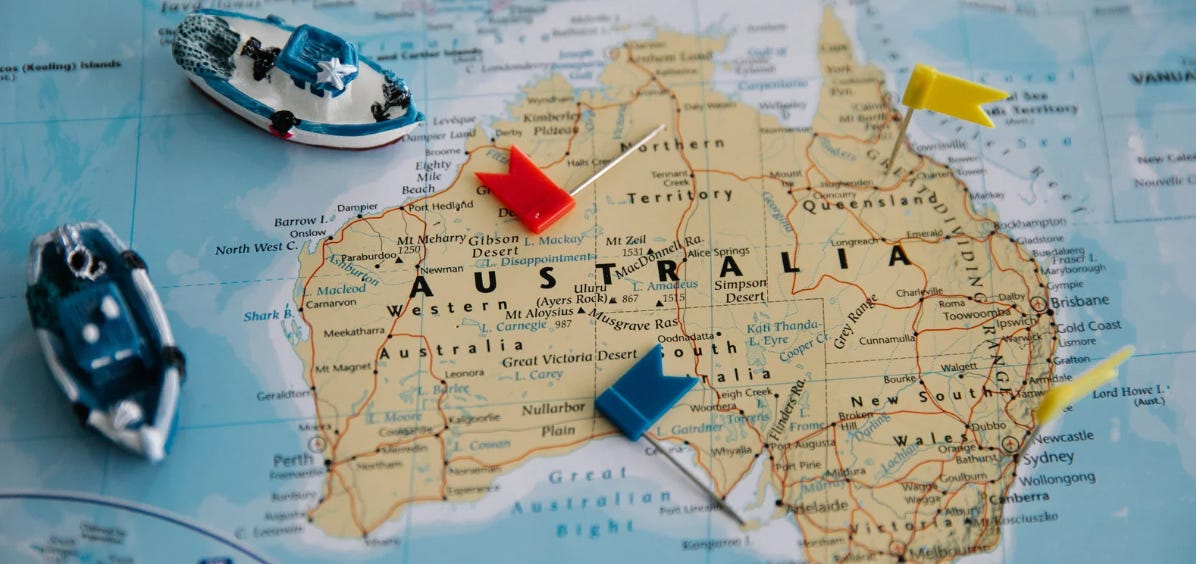
Stay with me as I head to Australia.
I’ll be discussing my experiences from down under, and continuing the my career in treating the root cause, health creation, metabolic and mental health.
If you read to the end, thank you. This is a view point I held in March 2025, much of it I continue to feel the same way about. But what about the Australian system? Well everything has its flaws, and 18 months here is barely scratching the surface to identify them.
Stay for more health prevention content, but also for more personal and professional experiences of my move from the UK to Australia.
Hi Kiran,I hope you’re feeling well!
Very interesting and sad. A bit of an eye opener for me as a user of the NHS. I'm not medical.
Looking forward to hearing how things work out in Australia.
Regards, Paul.